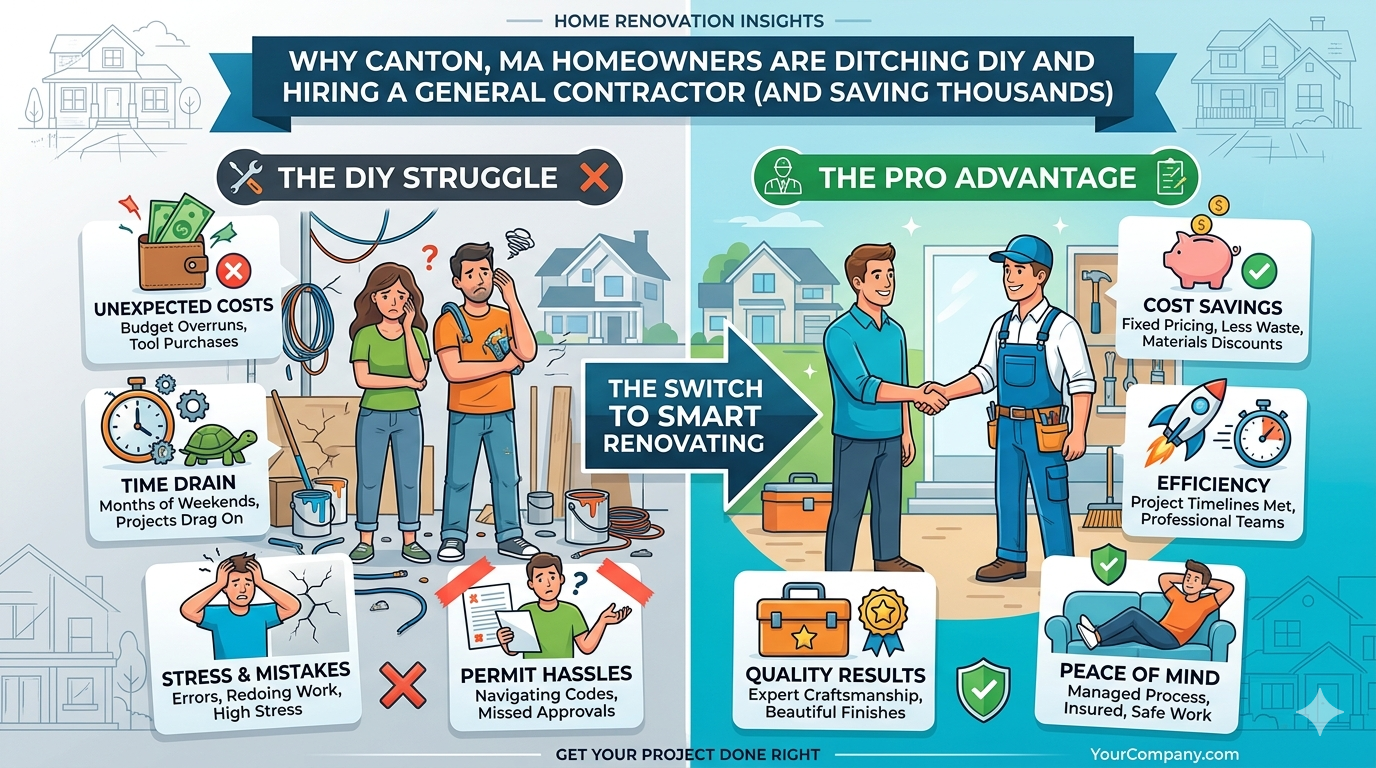

How to Hire a Construction Company in Massachusetts Without Getting Ripped Off
Hiring a construction company is a big decision. Whether you’re planning a kitchen remodel, bathroom renovation, home addition, basement renovation, or a larger home improvement project, the contractor you choose can make the difference between a smooth experience and a stressful one.
The problem is that many homeowners don’t know what to look for when comparing contractors. A low estimate can look attractive, but it doesn’t always mean you’re getting the best deal. Sometimes the cheapest bid leaves out important work, uses lower-quality materials, or leads to unexpected change orders later.
So, how do you hire a construction company in Massachusetts without getting ripped off?
The answer isn’t simply finding the cheapest contractor. You need to compare experience, licensing, insurance, project scope, communication, references, contracts, and pricing.
Here is the process I recommend homeowners follow before hiring a construction company in Massachusetts.
1. Know What Type of Contractor You Actually Need
Before calling contractors, figure out what your project actually involves.

A small painting project may only require a specialty contractor. But if you’re remodeling an entire kitchen, adding a bathroom, finishing a basement, or changing the layout of your home, you may need a general contractor in Massachusetts to coordinate multiple trades.
General Contractor vs. Specialty Contractor
A general contractor may coordinate several parts of a project, including:
- Demolition
- Carpentry
- Plumbing
- Electrical work
- Flooring
- Drywall
- Painting
- Cabinet installation
- Permits and inspections
- Subcontractor scheduling
The more complicated the project, the more valuable proper project coordination becomes.
If you’re hiring multiple contractors yourself, you may save money on management fees, but you’re also taking on the responsibility of scheduling trades, resolving conflicts, coordinating inspections, and making sure everything is completed in the correct order.
2. Don’t Automatically Choose the Cheapest Estimate

This is one of the biggest mistakes I see homeowners make.
You get three estimates:
- Contractor A: $85,000
- Contractor B: $94,000
- Contractor C: $118,000
The $85,000 estimate looks like the obvious winner.
But what if Contractor A didn’t include certain electrical upgrades? What if flooring isn’t included? What if their allowance for cabinets is significantly lower? What if demolition and disposal weren’t included?
Suddenly, that $85,000 project may not actually cost $85,000.
Compare Estimates Line by Line
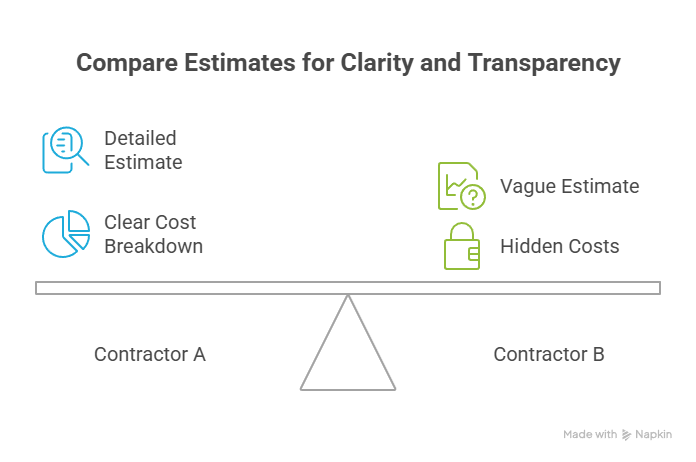
When comparing construction company estimates in Massachusetts, look beyond the final number.
Compare:
- Labor
- Materials
- Fixtures
- Demolition
- Disposal
- Permits
- Subcontractors
- Finishing work
- Cleanup
- Project management
- Allowances
- Warranty coverage
A good estimate should make it reasonably clear what you’re paying for.
If one contractor provides a two-page estimate and another provides a detailed proposal explaining the scope of work, don’t assume they’re offering the same project.
3. Verify Licensing and Registration

Before signing a contract, verify that the contractor has the credentials required for your particular project.
Massachusetts has specific requirements involving Home Improvement Contractor (HIC) registration and Construction Supervisor Licensing (CSL), depending on the work being performed.
Don’t just ask, “Are you licensed?”
Ask for the relevant license or registration information and verify it through the appropriate Massachusetts resources.
Why This Matters
A contractor’s years of experience are important, but credentials and compliance matter too.
You want to know that you’re dealing with a legitimate professional who understands the requirements involved in residential construction.
If a contractor becomes defensive when you ask for licensing, registration, insurance, or contract information, consider that a warning sign.
4. Ask for Proof of Insurance

Licensing and insurance are not the same thing.
Before work begins, ask the construction company for appropriate proof of insurance.
General Liability Insurance
General liability coverage can help address certain claims involving property damage or injuries arising from the contractor’s operations.
Workers’ Compensation
If the company has employees, workers’ compensation coverage is another important consideration.
You don’t want to assume that everything is covered simply because a contractor says, “Don’t worry about it.”
Ask questions. Get documentation. A professional contractor should understand why you’re asking.
5. Check References and Previous Projects

A contractor can tell you they’re excellent at remodeling.
Their previous customers can tell you whether that’s actually true.
When evaluating a construction company in Massachusetts, ask for references from recent projects that are similar to yours.
For example, if you’re planning a kitchen renovation, ask about previous kitchen remodeling projects rather than only looking at a contractor’s general portfolio.
Ask Previous Customers About More Than Quality
Don’t just ask:
“Did you like their work?”
Ask:
- Did the project stay close to the original budget?
- Did the contractor communicate regularly?
- Did workers show up when expected?
- Was the job site kept reasonably clean?
- Were unexpected problems explained?
- How were change orders handled?
- Did the contractor finish the project?
- Would you hire them again?
That last question can be particularly revealing.
6. Get Everything in a Detailed Written Contract

This is one of the most important steps in the entire hiring process.
A handshake isn’t enough for a major construction project.
A written contract should clearly explain what the contractor and homeowner have agreed to.
What Should Be Included?
Depending on the project, your construction contract should address things such as:
- Scope of work
- Materials and finishes
- Project price
- Payment schedule
- Estimated timeline
- Start date
- Completion expectations
- Permit responsibilities
- Change-order procedures
- Cleanup
- Warranty information
- Responsibilities of the homeowner and contractor
The more detailed the project, the more important the written documentation becomes.
Don’t Rely on Verbal Promises

One of the most common construction problems is:
“But you told me that was included.”
Maybe the contractor did say it.
Maybe the homeowner misunderstood.
Maybe the scope changed.
That’s exactly why important decisions should be documented.
If you discuss an important change during the project, put it in writing and make sure both sides understand the cost and scope before the additional work begins.
7. Understand How Construction Payments Work

Be cautious if someone demands a large payment upfront without clearly explaining what the money covers.
A professional payment schedule should make sense for the project and contract.
Payments may be tied to project milestones rather than simply handing over a large amount of money before work starts.
For example, depending on the project, payments might correspond with stages such as:
- Contract signing and initial deposit
- Preparation or demolition
- Rough construction
- Major installations
- Substantial completion
- Final completion and punch-list items
The exact structure should be agreed upon in your contract and comply with applicable Massachusetts requirements.
8. Ask Who Will Actually Do the Work

Not every construction company performs every trade with its own employees.
Many general contractors use trusted subcontractors for plumbing, electrical, HVAC, roofing, masonry, and other specialized work.
That’s not automatically a problem.
In fact, using experienced specialty trades can be a major advantage.
The important thing is knowing who is responsible for coordinating the work.
Ask These Questions
Before hiring a contractor, ask:
- Will you use subcontractors?
- Which parts of the project will they handle?
- Who supervises them?
- Who do I contact if there’s a problem?
- Who coordinates inspections?
- Who is responsible for correcting defective work?
You don’t necessarily need one company to physically perform every task. You do need clear accountability.
9. Understand What Can Cause the Price to Change

Even with a good estimate, construction projects can uncover surprises.
For example, once a wall is opened, you might discover:
- Water damage
- Outdated wiring
- Plumbing problems
- Structural issues
- Mold or rot
- Improper previous work
- Code-related issues
These problems aren’t necessarily signs that your contractor is trying to overcharge you.
The key is how the contractor handles them.
Ask for Change Orders in Writing
If additional work is necessary, ask:
- What was discovered?
- Why is the work necessary?
- How much will it cost?
- Will it affect the schedule?
- Is there another option?
- What happens if we don’t perform the work?
Don’t approve major additional work based solely on a verbal conversation.
10. Watch for Contractor Red Flags

Knowing how to hire a construction company in Massachusetts also means knowing when to walk away.
Be cautious if a contractor:
- Gives you an unusually low estimate without explaining why
- Pressures you to sign immediately
- Refuses to provide a written contract
- Won’t provide proof of insurance
- Can’t provide relevant references
- Gives vague answers about permits
- Demands unexplained payments
- Changes the price repeatedly without documentation
- Has consistently poor communication
- Makes promises that sound too good to be true
One red flag doesn’t automatically mean a contractor is dishonest.
But several red flags together should make you stop and investigate further.
11. Ask These Questions Before Hiring a Construction Company
Before signing anything, I recommend asking every contractor the same basic questions.

Questions to Ask
- How long have you been doing this type of work?
- Are you properly licensed or registered for the work?
- Can you provide proof of insurance?
- Can I see recent projects similar to mine?
- Can you provide references?
- Who will supervise the project?
- Will subcontractors be involved?
- What’s included in the estimate?
- What isn’t included?
- How are change orders handled?
- Who handles permits?
- What payment schedule do you require?
- What happens if the project takes longer than expected?
- What warranty or follow-up service do you provide?
Pay attention not only to the answers but also to how clearly the contractor communicates.
If communication is difficult before you’ve even signed the contract, it may become much harder once construction begins.
12. Get Multiple Estimates—but Make Sure They’re Comparable

Getting multiple bids is smart.
But three completely different scopes of work aren’t really three comparable estimates.
For example, Contractor A might include premium cabinets, Contractor B might include mid-range cabinets, and Contractor C might provide only a cabinet allowance.
The prices won’t tell you much unless you understand what’s included.
The Best Estimate Isn’t Always the Lowest
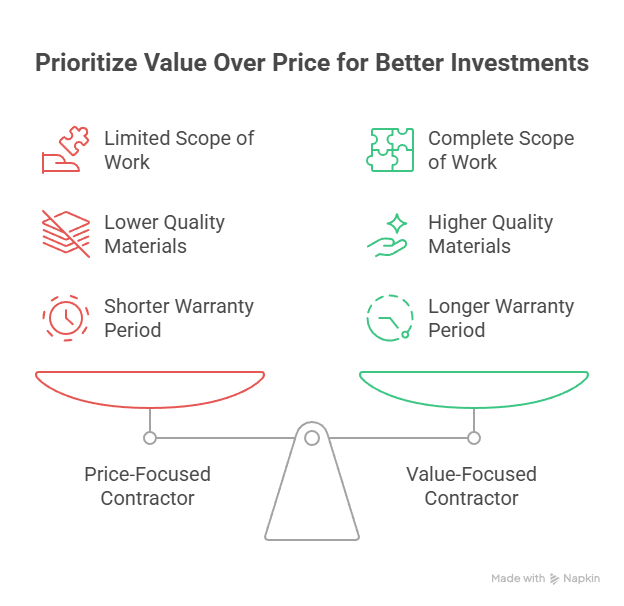
When evaluating contractors, think about value rather than price alone.
Consider:
- Experience
- Reputation
- Communication
- Workmanship
- Scope of work
- Materials
- Schedule
- Warranty
- Contract quality
- Overall professionalism
A contractor who costs slightly more but provides a significantly more complete scope may ultimately be the better investment.
What Does It Cost to Hire a Construction Company in Massachusetts?

There isn’t one universal price for construction work in Massachusetts.
The cost depends heavily on the project.
A small bathroom renovation is obviously different from a full home addition. A kitchen remodel in an older home may also uncover issues that wouldn’t exist in a newer property.
Factors affecting construction costs in Massachusetts can include:
- Project size
- Location
- Labor
- Materials
- Design complexity
- Structural changes
- Plumbing
- Electrical work
- Permits
- Existing conditions
- Finish selections
- Accessibility
- Project timeline
That’s why online “average renovation costs” should be treated as general starting points rather than guaranteed prices.
For an accurate budget, get a detailed estimate based on your actual property and scope of work.
The Safest Way to Hire a Construction Company in Massachusetts

If you want to reduce the chances of getting ripped off, don’t rush the hiring process.
Use this simple approach:
Research → Verify → Compare → Interview → Review the Contract → Confirm the Scope → Sign → Monitor Progress
Start by finding several reputable contractors.
Then verify credentials and insurance. Review their past work and references. Get detailed written estimates. Compare what each contractor is actually offering.
Finally, make sure the contract clearly explains the project before work begins.
A good construction project isn’t just about getting the lowest price. It’s about knowing what you’re paying for and having confidence that the contractor can deliver it.
Frequently Asked Questions
How do I find a reputable construction company in Massachusetts?
Start by asking for recommendations, researching local reviews, reviewing completed projects, checking applicable licensing or registration information, verifying insurance, and speaking with references. Get multiple detailed estimates before making your decision.
How many contractor estimates should I get?
There isn’t a magic number, but getting multiple detailed estimates can help you understand the market and identify significant differences in scope and pricing. Make sure you’re comparing similar scopes of work.
What should I look for in a Massachusetts construction contract?
Look for a clear scope of work, materials, price, payment schedule, project timeline, change-order procedures, permit responsibilities, warranty information, and other responsibilities agreed upon by both parties.
Should I always choose the lowest construction bid?
No. The lowest bid may be missing important work or using lower allowances. Compare the entire scope, materials, experience, communication, references, and contract—not just the final price.
How can I tell if a contractor is overcharging me?
Compare detailed estimates from multiple contractors and look at labor, materials, allowances, subcontractors, permits, and the exact scope. A higher price isn’t automatically overcharging if the contractor is providing a more comprehensive scope or higher-quality materials.
Do I need a licensed contractor for a home renovation in Massachusetts?
Massachusetts has specific licensing and registration requirements that can depend on the type and scope of work. Homeowners should verify which requirements apply to their particular project before hiring a contractor.
Ready to Start Your Massachusetts Construction Project?
Hiring the right contractor doesn’t have to be complicated.
Take your time, ask questions, compare detailed estimates, verify credentials, and make sure everything important is documented before construction begins.
If you’re planning a home renovation, kitchen remodel, bathroom remodel, basement renovation, addition, or other construction project in Massachusetts, [Business Name] can help you understand your options and develop a clear scope of work.
Contact NVAS Construction today to discuss your project and request a detailed estimate. A well-planned project starts with the right contractor.